Military Career &
Strategic Command

Four Decades of Distinguished Service to the Indian Armed Forces

Lt. Gen. K. T. Parnaik during his Indian Army service

A Soldier's Odyssey

Commissioned into the Indian Army in 1974, Lt. Gen. Kaiwalya Trivikram Parnaik served nearly four decades during a period of major transformation in India's security architecture. He began his career in the aftermath of the 1971 war, as India consolidated its strategic posture and embarked on military modernisation.

His leadership was forged in the regimental tradition of the 1970s Indian Army, where discipline, camaraderie, and the bond between officers and jawans formed the bedrock of military effectiveness across some of India's most inhospitable terrains.

His career spanned India's major security challenges: counter-insurgency operations in Punjab, the Northeast, and Sri Lanka in the 1980s; the intensification of proxy war in Jammu and Kashmir; the Kargil conflict; and the shift to nuclear deterrence in the 1990s. His responsibilities grew at each inflection point.

Rising from company-level leadership to command of brigades, divisions, corps, and army-level formations, Lt. Gen. Parnaik distinguished himself at every echelon -- a trajectory achieved by only a select cadre of officers.

His service coincided with the Army's technological modernisation, from advanced border surveillance to network-centric warfare. He combined traditional soldiering wisdom with an appreciation for technology, a duality that proved valuable in his later command assignments.

Across nearly four decades, he served in diverse terrains -- from plains and deserts to high-altitude Himalayan frontiers. This breadth of experience gave him an unparalleled understanding of the Indian Army's capabilities and India's complex security landscape.

Command & Leadership Appointments

Progressively greater responsibility at each appointment, demanding new dimensions of strategic thought and operational mastery.

01

Regimental & Battalion Command

Battalion command is the crucible of military leadership in the Indian Army, where an officer's character and tactical ability are tested most directly. Lt. Gen. Parnaik led his unit with distinction, forging a deep bond between commander and troops.

The Foundation of Command -- Leading from the Front
02

Brigade Command

Brigade command marks the transition from tactical to operational-level leadership, requiring the orchestration of combined-arms operations integrating infantry, armour, artillery, and engineering across a wider area of responsibility.

Tactical to Operational -- Combined Arms Mastery
03

Division Command

Divisional command entrusted him with managing large formations across expansive areas, coordinating with multiple agencies, and executing operations with strategic implications. This role honed his ability to manage complexity and exercise independent judgment.

Large Formation Leadership -- Strategic Responsibility
04

Corps Command

Corps command requires orchestrating multi-division operations, balancing offensive and defensive postures, and managing extended lines of communication. This penultimate echelon of field leadership tested the full breadth of his military experience.

Multi-Division Theatre Operations
05

Army Command -- Northern Command

As GOC-in-C Northern Command, Lt. Gen. Parnaik led India's most operationally active military theatre, commanding hundreds of thousands of troops across Jammu and Kashmir and Ladakh along two contested international boundaries.

The Pinnacle -- India's Most Critical Theatre Command

Commanding India's Most Critical Theatre:
Northern Command

Lt. Gen. K. T. Parnaik as GOC-in-C Northern Command

Northern Command, headquartered in Udhampur, is the most operationally active command in India's military structure, overseeing Jammu and Kashmir and Ladakh. Lt. Gen. K. T. Parnaik served as GOC-in-C during 2009-2011, a period of significant operational activity and evolving strategic dynamics.

The command manages multiple corps comprising hundreds of thousands of troops, facing a dual challenge unique in global military practice: an active counter-insurgency campaign in Kashmir alongside full-spectrum conventional deterrence against two nuclear-armed adversaries. Both the Line of Control with Pakistan and the Line of Actual Control with China fall within its responsibility.

Northern Command oversees the Siachen Glacier -- the world's highest battlefield at over 20,000 feet with temperatures below minus 60 degrees Celsius. Lt. Gen. Parnaik managed these operations with awareness of both their strategic necessity and the immense sacrifice they demand.

The terrain under Northern Command ranges from the subtropical plains of Jammu at near sea-level to the glaciated peaks of the Karakoram at over 22,000 feet -- the most extreme variation of any military command theatre in the world.

His tenure was marked by strategic clarity and sustained operational readiness across counter-insurgency, border management, and conventional deterrence simultaneously. Notably, he was the first Maharashtrian officer to hold this appointment, reflecting the Indian Army's meritocratic traditions.

Commanding in J&K extends beyond the military domain. Lt. Gen. Parnaik worked at the intersection of military strategy, diplomatic sensitivity, and civil administration, coordinating closely with the civilian government, law enforcement, and intelligence organisations while managing a diverse populace.

Under his command, Northern Command maintained an aggressive posture along the LoC while pursuing calibrated internal security to minimise civilian hardship. He championed integrating civic action with security operations and prioritised border infrastructure modernisation, enhanced surveillance, and rapid-response mechanisms.

The operational frameworks and strategic orientations he established continue to inform the Army's approach in the region. His command represented the culmination of a lifetime of military service converging in the leadership of India's most consequential theatre.

Strategic Operations &
Theatre Management

The counter-insurgency campaign in the Kashmir Valley required understanding the interplay between military force, political dynamics, and local aspirations. Under his stewardship, operations emphasised precision and proportionality, recognising the limitations of purely kinetic solutions.

The LoC required constant vigilance against infiltration and ceasefire violations, while the LAC in Ladakh demanded a posture calibrated to India-China diplomatic sensitivities while maintaining territorial firmness. Siachen Glacier operations continued to test the limits of logistics and human endurance.

Following Operation Parakram, Lt. Gen. Parnaik was instrumental in shaping operational concepts for hybrid warfare -- blending conventional threats, irregular warfare, and cyber capabilities. He emphasised integrating technology in border management, including enhanced surveillance, improved communications, and intelligence fusion mechanisms.

Border infrastructure development -- road construction, forward operating bases, and logistical corridors -- was a critical focus. He advocated these investments as a strategic imperative directly influencing the credibility of India's deterrent posture.

His command philosophy balanced aggressive posture with measured restraint, minimising collateral damage while maintaining operational effectiveness. In J&K, every operational decision carried political and diplomatic ramifications, demanding exceptional judgment at every level.

Strategic military operations in the Northern theatre

Perspectives on Defence &
National Security

Lt. Gen. Parnaik has consistently advocated for modernising India's armed forces -- not just equipment, but doctrine, organisational structures, and strategic culture. He emphasises that military power is most effective when integrated with diplomatic strategy, economic strength, and technology.

"

The evolution of conflict from conventional warfare to sub-conventional operations and now to the grey zone of information and hybrid warfare demands that India's defence establishment think beyond traditional paradigms. The battlefield of the future will be as much in the cyber and information domains as it will be in the mountains and plains.

Central to his thinking is jointmanship -- the imperative for the Army, Navy, and Air Force to operate as an integrated force. Drawing from his theatre command experience, he advocates for theatre commands and joint operational structures as a strategic necessity for modern multi-domain conflict.

On two-front warfare preparedness against Pakistan and China, Lt. Gen. Parnaik brings unique insight from commanding the theatre facing both adversaries. He emphasises strategic depth, rapid mobilisation, and forces capable of transitioning swiftly between operation types across varied terrain.

"

Military leadership is ultimately about people. The finest equipment and the most sophisticated doctrine are rendered ineffective without soldiers who are motivated, well-trained, and confident in their leadership. The human dimension of warfare remains paramount, even in an age of technology.

On hybrid warfare, he notes that boundaries between war and peace have blurred, with state and non-state actors using cyber attacks, information warfare, proxy forces, and economic coercion below the threshold of conventional response. He advocates developing comprehensive capabilities across this spectrum.

He frequently emphasises that India's security must be understood within the broader South Asian and Indo-Pacific context. His experience managing security along contested borders informs his continued contributions to national security discourse in his post-retirement career.

A Record of Valour & Service

Three of India's most distinguished military decorations, each representing a different facet of exemplary service.

Param Vishisht Seva Medal

PVSM

India's highest peacetime distinguished service decoration, awarded for exceptional service. Conferred in recognition of Lt. Gen. Parnaik's contributions to military leadership at the highest levels of command.

Uttam Yudh Seva Medal

UYSM

Awarded for distinguished service of an exceptional order during operations. Recognises Lt. Gen. Parnaik's leadership during active military operations under demanding conditions.

Yudh Seva Medal

YSM

Awarded for distinguished service of a high order during operations. Recognises the impact of his command decisions during active service in India's most challenging theatres.

38+
Years of Service
5
Command Appointments
3
Distinguished Service Awards
Lt. Gen. K. T. Parnaik -- the enduring legacy

The Enduring Legacy

From his 1974 commissioning to his culminating appointment as GOC-in-C Northern Command, Lt. Gen. Parnaik's career embodies the finest traditions of the Indian Army -- defined by integrity, operational courage, strategic vision, and commitment to the welfare of those he commanded.

His legacy endures through the operational frameworks he established at Northern Command, which continue to inform the Army's approach in J&K and along northern frontiers. The officers he mentored now hold positions of significant responsibility, carrying forward his professional ethos.

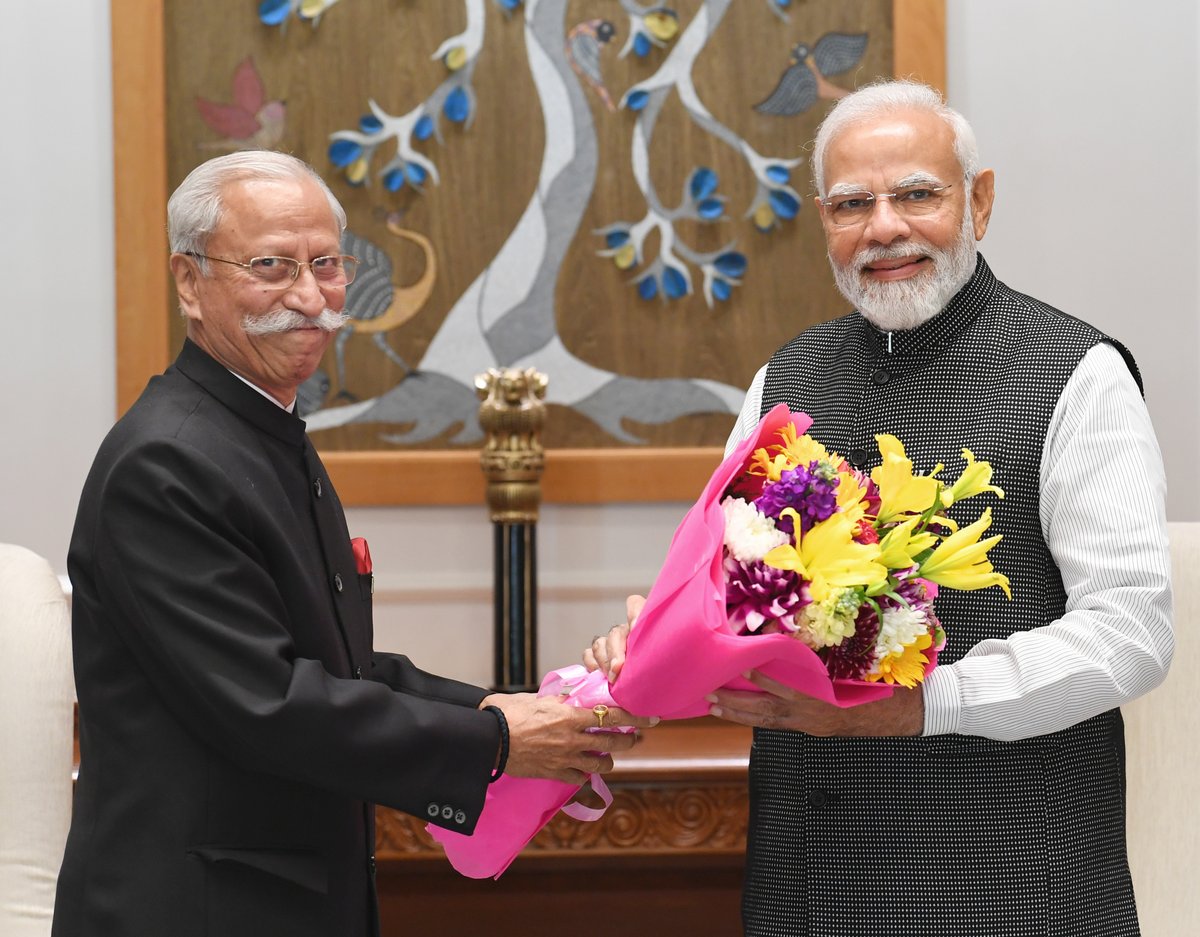
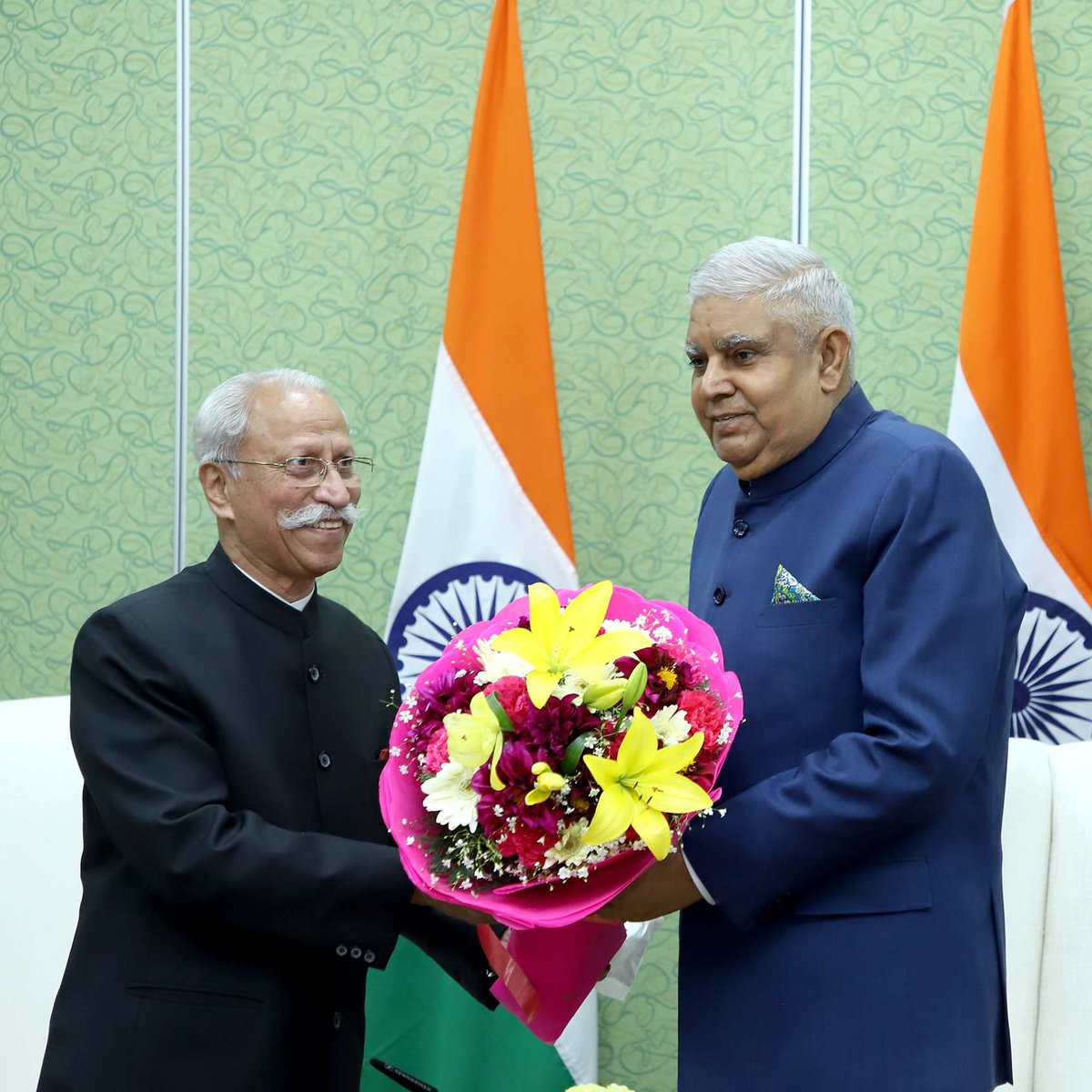
Post-retirement, he was appointed Governor of Arunachal Pradesh, bringing his strategic acumen and leadership to the governance of a sensitive frontier state. This appointment reflected recognition that high-level military command qualities are equally vital in civilian governance.

His career stands as a testament to selfless service -- the courage of serving in the harshest conditions, the moral strength to make difficult decisions, and the recognition that every achievement was made possible by the soldiers who served alongside him.