The Architecture of Decision-Making
Lt. Gen. K. T. Parnaik's decision-making framework was shaped by decades of operational command across India's most volatile theatres. His approach integrates multiple intelligence streams, considers second and third-order effects, and maintains flexibility in execution while remaining firm in strategic objectives.
As GOC-in-C of Northern Command, the Military Decision-Making Process required accounting for conventional operations, counter-insurgency, geopolitical sensitivities along the LoC and LAC, high-altitude terrain, and civilian welfare. Each decision synthesised intelligence, operational realities, and strategic objectives that were frequently in tension.
Lt. Gen. Parnaik ensured decisions were grounded in intelligence -- fusing HUMINT, SIGINT, satellite imagery, and open-source information into a comprehensive operational picture before issuing directives. This evidence-based approach ensured risks were understood and mitigated, with the quality of staff analysis directly determining the quality of command options.
In active operational theatres, Lt. Gen. Parnaik developed the ability to calibrate decision tempo to the operational environment -- knowing when rapid action was essential and when patience was more strategic. Speed without analysis leads to recklessness; analysis without timely action leads to paralysis.
As the 20th Governor of Arunachal Pradesh, Lt. Gen. Parnaik applied the same disciplined approach to policy analysis, stakeholder consultation, and constitutional review. The process remained identical in essence: gather intelligence, analyse options, consider second-order consequences, decide, execute, and review.
Mission command -- setting clear objectives while empowering subordinates to achieve them through their own initiative -- sits at the heart of this philosophy. As Governor, he extended this principle by empowering district administrators with clear mandates while holding them accountable for outcomes, an approach especially effective in Arunachal Pradesh where geographical remoteness demanded local initiative guided by state-level vision.
Principles of Command
Lead from the Front
Lt. Gen. Parnaik's career exemplifies visible leadership -- being present where the action is most intense. Physical presence at the point of decision builds trust and provides an unmediated understanding of ground realities no briefing can replicate.
Ground-Level Understanding
In Northern Command, this meant knowing every ridge, pass, and valley across Jammu, Kashmir, and Ladakh. As Governor, it meant understanding the aspirations and challenges of Arunachal Pradesh's diverse tribal communities. Strategic decisions uninformed by ground reality fail in execution.
Strategic Patience
Strategic patience is not inaction but the deliberate calibration of timing to maximise effect. In operations, this means waiting for the optimal moment; in governance, it means allowing consultative processes to mature rather than making hasty decisions.
Institutional Integrity
Lt. Gen. Parnaik consistently prioritised the long-term health of organisations he led over short-term advantage. This ensures that systems, processes, and values endure beyond any individual leader's tenure.
People First
Whether ensuring soldiers in forward posts had adequate provisions or championing the development needs of Arunachal Pradesh's remotest communities, welfare of troops and citizens remained the constant foundation of his command throughout his career.
Adaptive Leadership
The operational environment is never static -- threats evolve, opportunities emerge, and circumstances shift unpredictably. The capacity to adapt methods without losing sight of strategic objectives distinguishes exceptional leaders.
Moral Courage
Moral courage means standing by the right course of action even when unpopular, challenging superiors when necessary, and accepting responsibility for outcomes. In both military command and constitutional governance, certain moments demand this quality above all others.
Legacy Building
Lt. Gen. Parnaik's focus on legacy building ensures that improvements in governance structures, defence preparedness, and developmental frameworks continue delivering results long after his tenure. A leader who builds for the institution builds for posterity.
Strategy in Governance

The military concept of "centre of gravity" applies directly to governance: identifying the key factors -- community buy-in, infrastructure, institutional capacity -- upon which any policy initiative's success depends. Lt. Gen. Parnaik used this to prioritise effort across Arunachal Pradesh's many development challenges.
How a governor communicates intent to elected representatives, civil servants, tribal leaders, military counterparts, and citizens determines governance effectiveness. Lt. Gen. Parnaik brought military-grade clarity to this task, with communications characterised by precision and purpose calibrated for multiple audiences.
Data-driven governance was a hallmark of Lt. Gen. Parnaik's tenure. Site visits to remote districts, direct interactions with local leaders, and first-hand reporting bypassed bureaucratic filters, ensuring the Governor's office had an accurate picture of conditions across the geographically dispersed state.
Resource allocation in governance -- distributing limited resources across infrastructure, education, healthcare, security, and cultural preservation -- mirrors force allocation in military operations. Lt. Gen. Parnaik's experience managing complex resource portfolios across Northern Command's vast area provided a strong foundation for this challenge.
"Operational art" -- the critical layer between strategic vision and tactical execution -- applies directly to governance. The Governor's office functions as a strategic headquarters: setting direction, allocating resources, coordinating agencies, and ensuring local actions cohere into statewide progress. Lt. Gen. Parnaik's tenure demonstrated this military concept is indispensable to governance.
Measurable Impact
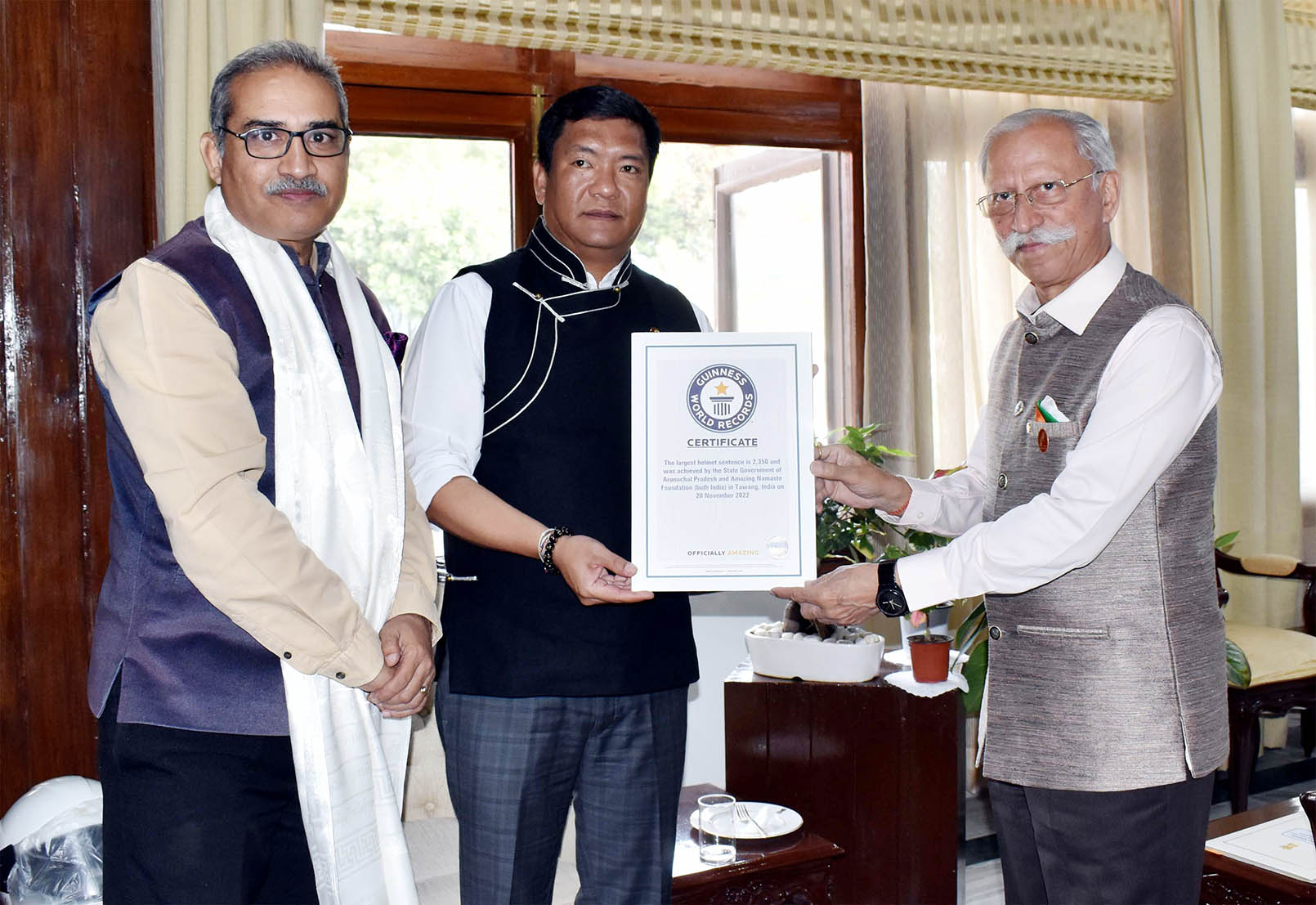
Lt. Gen. Parnaik's tenure in Arunachal Pradesh was marked by improved governance processes, enhanced civil-military coordination, and development initiatives addressing both immediate needs and long-term sustainability -- the direct result of applying systematic leadership to frontier governance challenges.
Administrative modernisation introduced greater transparency and efficiency in state institutions. Stronger communication linkages between the Raj Bhavan and district administrations, modelled on military command-and-control frameworks, enabled near real-time feedback and significantly improved governance responsiveness.
Arunachal Pradesh shares extensive borders with China and Myanmar, requiring seamless civil-military coordination. As a former Army Commander, the Governor brought substantive -- not merely procedural -- understanding to this coordination, informed by a deep grasp of strategic imperatives.
Development oversight was systematised to ensure funding reached intended beneficiaries and project timelines were maintained. Institutional strengthening in education and cultural sectors reflected a long-term developmental vision.
Infrastructure Development Oversight
Monitoring road connectivity, bridge construction, and infrastructure projects in remote and border areas.
Border Area Development
Prioritising development and welfare of border-region communities within the state's development trajectory.
Educational Institution Engagement
Engaging with universities, colleges, and schools statewide to promote educational excellence as a foundation for development.
Security Coordination
Strengthened civil-military coordination, leveraging unique insight into military operational requirements in the border state.
Cultural Preservation Initiatives
Championing preservation of Arunachal Pradesh's cultural diversity, recognising indigenous traditions as integral to the state's identity.
Administrative Modernization
Improved governance processes, transparency measures, and communication frameworks across all state departments.
Military Command vs. Constitutional Governance
Military Command
Constitutional Governance
Command Authority
Derived from rank and the chain of command, military authority is hierarchical, binding, and enforced through codified military discipline.
Constitutional Authority
The Governor's authority derives from the Constitution, exercised within democratic norms, legislative processes, and judicial oversight, respecting separation of powers and federal structure.
Military Hierarchy
Orders flow downward, information flows upward through established channels. Unity of command eliminates ambiguity, enabling rapid decision-making across vast areas.
Democratic Institutions
Governance operates through legislature, judiciary, executive, and constitutional bodies with overlapping jurisdictions, requiring consensus-building and leadership through persuasion.
Operational Planning
A rigorous process involving threat assessment, force allocation, logistics synchronisation, and contingency development, stress-tested through war games and modified in real-time.
Policy Development
Involves research, stakeholder consultation, legislative review, budgetary analysis, and impact assessment, balancing diverse community needs with resource constraints.
Theatre Management
Coordinating multiple corps, divisions, and brigades across diverse terrain, synchronising with air and naval forces while managing vast logistics networks and operational security.
State Administration
Coordinating multiple departments and agencies, managing development across diverse districts, synchronising central and state programmes, and ensuring law and order across a vast area.
Force Deployment
Involves threat assessment, terrain analysis, and logistical sustainability to position forces for deterrence and contingency response while maintaining repositioning flexibility.
Resource Allocation
Distributing limited financial, human, and material resources across competing priorities, balancing urgent needs against long-term investments with equitable regional distribution.
Intelligence Analysis
Synthesises multiple sources into actionable assessments of adversary capabilities, intentions, and vulnerabilities, informing all levels of operational planning and execution.
Data-Driven Governance
Collecting and analysing socioeconomic data, development indicators, and citizen feedback to ensure governance interventions are targeted, efficient, and responsive to actual ground conditions.
A Continuum of Service
Lt. Gen. Parnaik's transition from GOC-in-C of Northern Command to 20th Governor of Arunachal Pradesh was not a change of vocation but an evolution of the same commitment: the defence and development of the nation. His career demonstrates that true leadership is principle-driven, not domain-specific.
Disciplined problem-solving, intelligence-led decision-making, commitment to welfare, and the capacity to lead diverse teams are as essential in the Raj Bhavan as in a military headquarters. While the instruments of power differ, the principles of their effective exercise remain constant.
This continuum establishes a model for leveraging senior military experience in governing strategically significant states. Arunachal Pradesh's unique challenges of geography, demography, and geopolitical sensitivity required precisely the leadership that decades of complex operational experience produces.
The institutions he strengthened, processes he refined, and vision he articulated for military readiness and state development constitute an enduring legacy. The truest measure of impact is not what was accomplished in the moment, but what was built to last.