Regional Governance
Governance at India's Eastern Frontier
Arunachal Pradesh, India's largest northeastern state, spans 83,743 square kilometres with a population of approximately 1.4 million and 26 major tribes comprising over 100 sub-tribes. Under Governor K. T. Parnaik, the state's governance addresses the dual mandate of development and security.
Traditional tribal governance systems -- the kebang (Adis), buliang (Apatanis), and ngefaa (Nishis) -- have functioned for centuries as councils for dispute resolution, resource management, and social regulation. The constitutional administration, established with statehood in 1987, must balance modern governance imperatives with the deep-rooted legitimacy of these customary institutions.
Terrain ranging from subtropical foothills to peaks above 7,000 metres leaves many communities accessible only by foot or helicopter. The Inner Line Permit system restricts entry to protect tribal land rights and cultural integrity; Governor Parnaik has advocated modernising the ILP framework while preserving its protective intent.
With villages often days away from the nearest government office, Governor Parnaik has championed mobile governance initiatives that bring services to the people. This approach recognises that effective governance must adapt to geography rather than demanding citizens traverse extreme terrain.
Since statehood on 20 February 1987, Arunachal Pradesh has developed a growing network of roads, schools, and health centres, though progress remains uneven between Itanagar and interior areas. The Governor's approach emphasises equitable development reaching the most remote villages, not just towns along the highways.
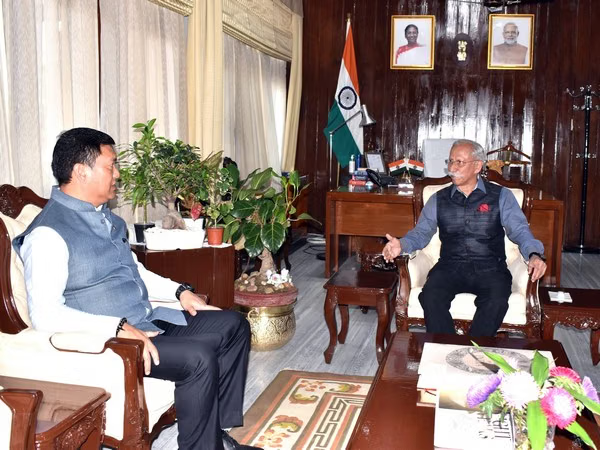
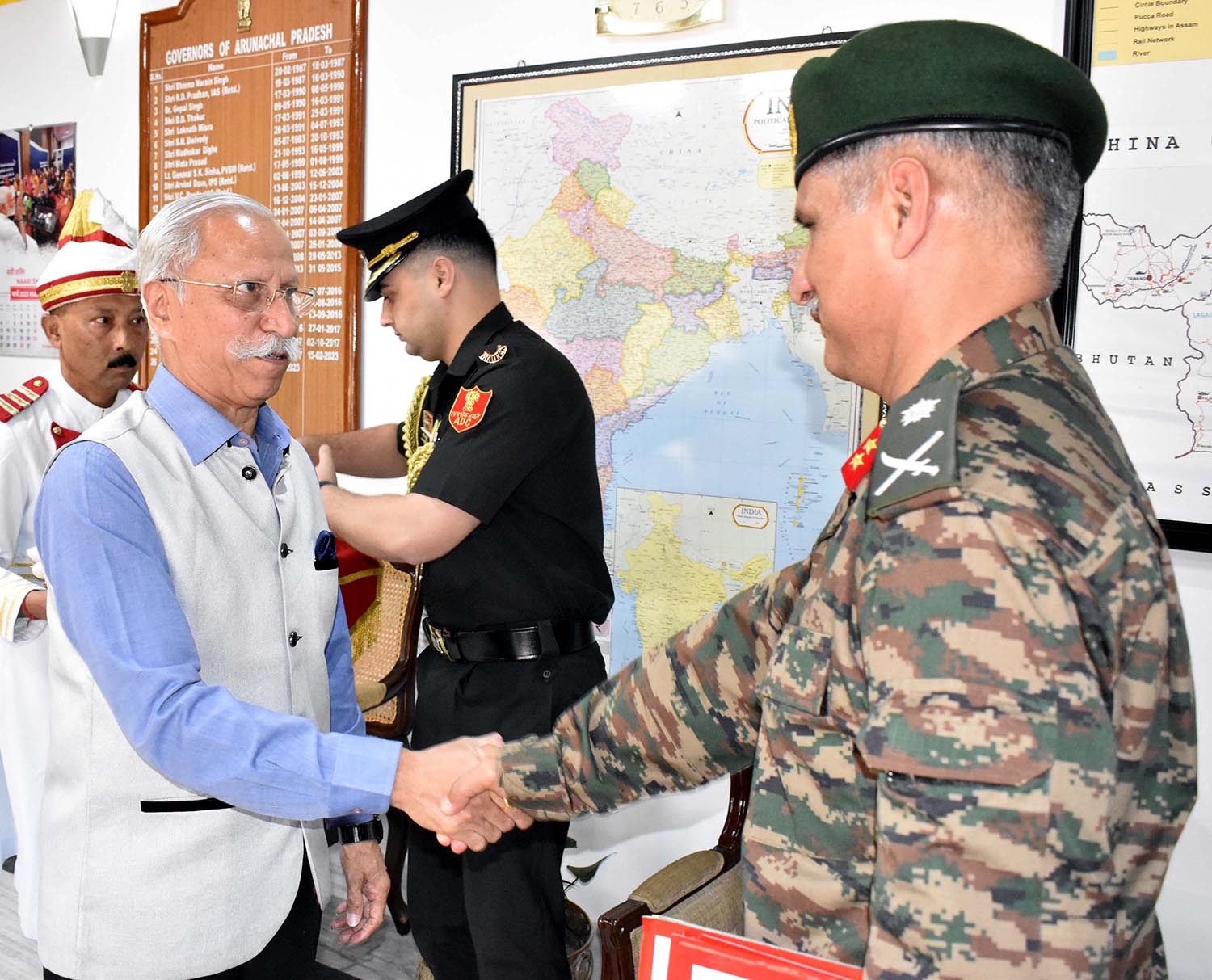
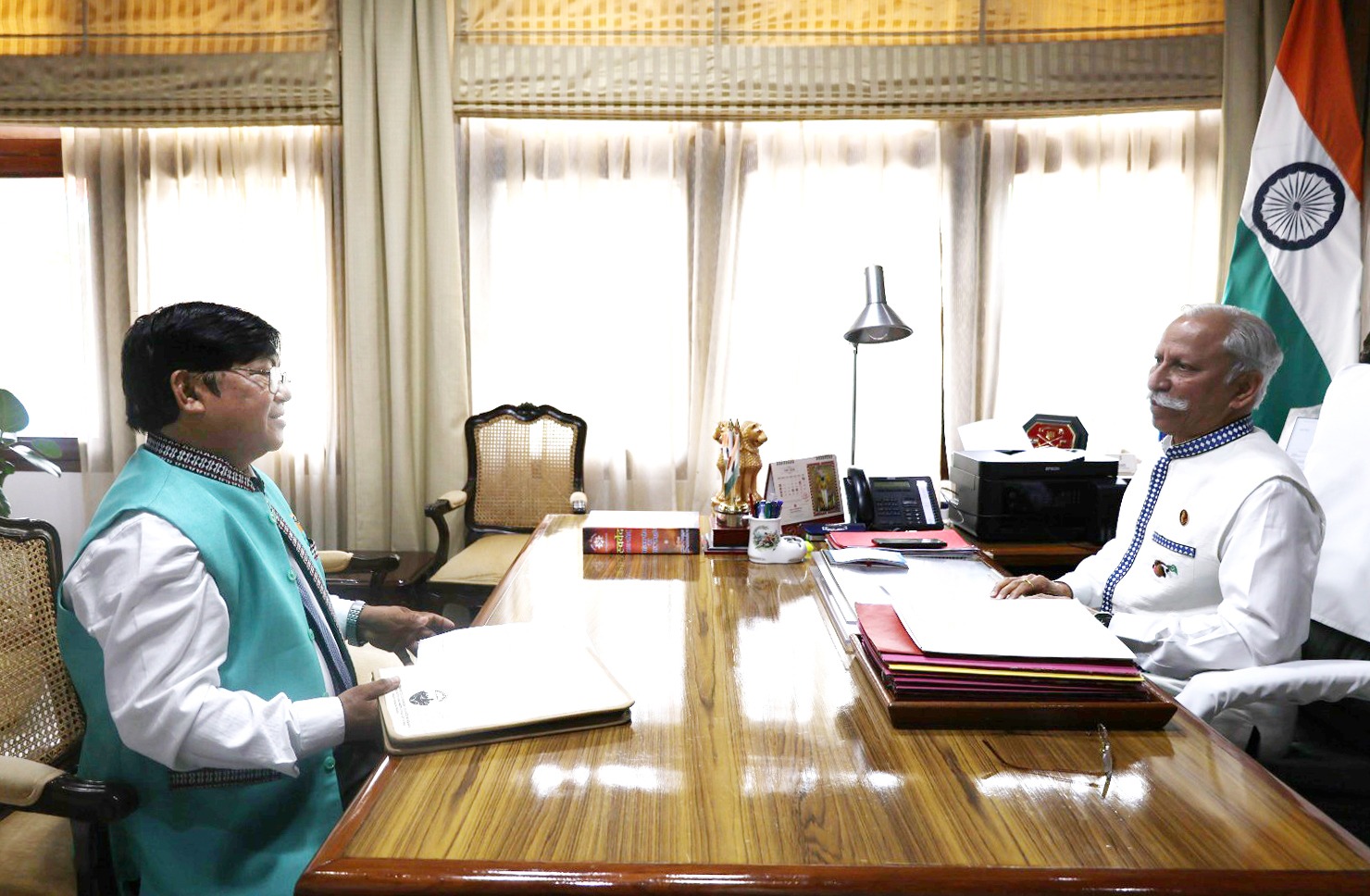
The Raj Bhavan has evolved into a coordination hub where tribal leaders, elected representatives, military commanders, and civil servants converge. Governor Parnaik's open-door policy and extensive travel across the state have earned respect from communities historically distant from power.
Strategic Significance
The Strategic Calculus of India's Northeast
Arunachal Pradesh shares approximately 1,129 kilometres of international boundary with China, Myanmar, and Bhutan. The McMahon Line, drawn during the 1914 Simla Convention, forms the de facto border with China, which claims roughly 90,000 square kilometres of the state as "South Tibet," making it a focal point of India-China strategic competition.
The Tawang corridor, providing access to India's largest Buddhist monastery and the second largest in the world, holds particular strategic weight as the route through which Chinese forces advanced during the 1962 war. That conflict's lessons continue to inform every aspect of contemporary defence planning in the state.
China's infrastructure build-up on the Tibetan plateau -- model villages, highways, rail links, and military installations -- has prompted India's sustained border development programme. The Sela Tunnel, the world's longest bi-lane tunnel at over 13,000 feet, now provides all-weather connectivity to Tawang. Governor Parnaik has consistently advocated for accelerating such strategic infrastructure.
Central to India's Act East Policy, Arunachal's Myanmar border provides the land bridge to Southeast Asia. The Pangsau Pass, the historic Ledo Road, and potential revival of the Stillwell Road position the state as a future hub of regional trade. The Governor has emphasised leveraging strategic value for economic opportunity, turning a frontier into a gateway.
Military infrastructure has accelerated with advanced landing grounds at Mechuka, Along, Pasighat, Tuting, and Vijaynagar, while the Border Roads Organisation pushes connectivity into previously inaccessible valleys. New military formations dedicated to the region reflect the strategic priority assigned to the northeast.
Lt. Gen. Parnaik's experience commanding Northern Command, responsible for the borders of Jammu and Kashmir and Ladakh, prepared him for this multidimensional challenge. His governance reflects the understanding that security and development are complementary -- India's frontier presence is expressed through both military strength and the prosperity of its people.
Border Leadership
Leading at the Nation's Edge
Governing a border state requires balancing development with security imperatives and ensuring border populations feel connected to the national mainstream. Lt. Gen. Parnaik's experience commanding Northern Command in Jammu and Kashmir and Ladakh provides an intuitive understanding of border dynamics.
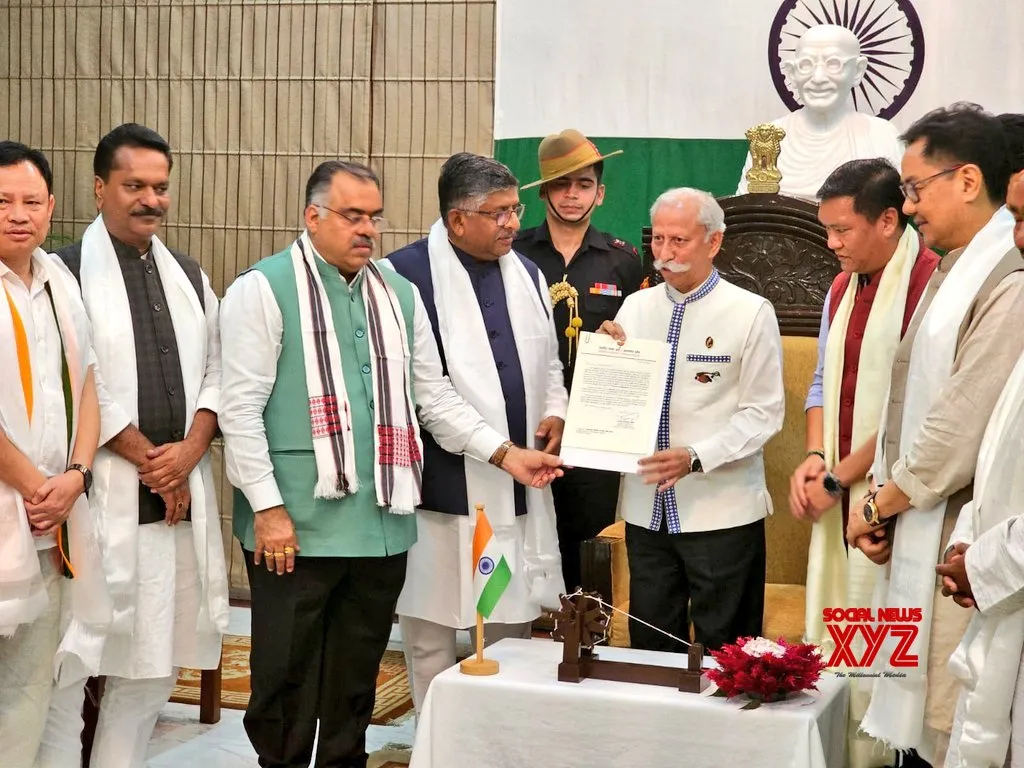
Civil-military coordination operates on multiple levels: the Governor bridges the state government and defence establishment on land acquisition and forward-area welfare, while deputy commissioners and military commanders collaborate daily on road maintenance and disaster response. Governor Parnaik has institutionalised regular coordination mechanisms, drawing on his fluency in both military and civilian administration.
Communities along the McMahon Line and India-Myanmar border face restricted movement, limited market access, and the constant presence of military installations. The Governor has argued that these populations -- whose very presence is an expression of sovereignty -- deserve tangible investment in schools, health centres, connectivity, and economic opportunities.
Military requirements for security zones and controlled access can conflict with civilian development needs. Governor Parnaik's lifetime of military experience gives him credibility to advocate for civilian needs while respecting security constraints. His interventions have helped resolve land disputes and accelerate dual-use infrastructure projects.
Governor Parnaik's extensive travels to remote border areas -- often requiring helicopter flights where roads do not exist -- signal India's active engagement with its frontier. Each visit reinforces the message that the state and nation stand with those who live at the edge.
Development & Security
The Development-Security Nexus
In Arunachal Pradesh, development and security are inseparable. Every road serves as both a community lifeline and a military artery; every border school is both educational and an assertion of sovereignty. Governor Parnaik understands this duality at a level that informs every decision and resource allocation.
The Border Roads Organisation constructs dual-purpose military and civilian roads, while the Trans-Arunachal Highway will connect the state east to west. The Sela Tunnel, Nechiphu Tunnel, and expanding civilian air services are transforming the state's accessibility. Governor Parnaik has advocated for accelerating these projects with expedited timelines and adequate funding.
Interior districts struggle with teacher shortages, inadequate school infrastructure, and sparse healthcare facilities. The Governor has championed telemedicine, mobile health camps, and technology deployment to bridge geographic gaps, recognising that human development is the foundation of security.
BharatNet and similar initiatives are extending broadband to gram panchayats, enabling online education, digital banking, and e-governance. Governor Parnaik has emphasised digital connectivity as a strategic priority, recognising that information infrastructure is as vital as road infrastructure where physical access remains limited.
Hydropower Potential
With over 50,000 megawatts of untapped hydroelectric potential -- India's largest -- development must balance energy needs with environmental conservation and indigenous community rights. The Governor advocates sustainable, community-inclusive approaches that benefit local populations.
Tourism as Economic Engine
From the snow peaks of Tawang to the subtropical forests of Namdapha, adventure, cultural, and eco-tourism can generate livelihoods while preserving heritage. The Inner Line Permit system creates a tension between conservation and economic opportunity that requires careful calibration.
Horticulture & Agriculture
Diverse agro-climatic zones support kiwi, apple, citrus fruits, and large cardamom, while organic farming aligns with traditional practices to access premium markets. The Governor supports initiatives to strengthen supply chains and promote agricultural products nationally and internationally.
Environmental Conservation
Forests covering approximately 80 per cent of the state harbour endangered species including red panda, clouded leopard, and numerous endemic birds. The Governor supports a development model that treats environmental conservation as a cornerstone of progress.

Cultural Heritage
Preserving Heritage, Building Tomorrow
With 26 major tribes and over 100 sub-tribes, Arunachal Pradesh is among the world's most culturally diverse regions. The Monpa practise Buddhist traditions, the Adi maintain elaborate longhouses and communal governance, the Apatani are known for wet-rice cultivation and fish farming, and the Nyishi for their warrior traditions -- each community carries forward a distinct cultural inheritance.
Globalisation, migration, and youth aspirations create pressures that can erode traditional practices; several tribal languages face extinction within a generation. Governor Parnaik has supported initiatives to document and revitalise cultural traditions as living practices, encouraging tribal festivals and cultural institutions.
Institutions like Rajiv Gandhi University, NERIST, and NIT Yupia provide higher education pathways, while vocational programmes in weaving, bamboo craft, and organic agriculture blend traditional skills with modern techniques and market access. The Governor emphasises educational models that incorporate tribal knowledge alongside contemporary qualifications.
The state's young population stands at a crossroads between tradition and globalisation. Governor Parnaik engages with youth through school visits and inter-generational dialogue platforms, consistently communicating that tribal identity is a source of confidence to carry forward into the modern world.
Governor Parnaik's participation in tribal festivals, respect for traditional protocols, and engagement with diverse communities have established the Raj Bhavan as a patron of cultural heritage. In a state where the relationship between people and the constitutional head carries particular weight, this personal dimension is as significant as policy.
At a Glance
Arunachal Pradesh by the Numbers
Looking Ahead
Charting the Course Forward
Governor Parnaik's vision for Arunachal Pradesh is sustainable, inclusive, and security-conscious development that honours the state's character while positioning it for prosperity. The conviction is that Arunachal need not choose between heritage and ambition, conservation and development, or security and freedom.
Enhanced connectivity is central: the Trans-Arunachal Highway, expanded civilian air services, railway extensions, and broadband will collectively transform the economic and social landscape. The Governor envisions an Arunachal Pradesh fully integrated into India's mainstream while retaining its cultural distinctiveness and environmental integrity.
Youth empowerment is the Governor's most forward-looking priority. Investments in education, skills development, entrepreneurship, and exposure to national and international opportunities will determine whether Arunachal's young population becomes the engine of progress. Governor Parnaik encourages sports, cultural excellence, and institutional development to equip this generation.
The vision is inseparable from India's own: a state where ancient cultures thrive alongside modern institutions, where security and development reinforce each other, and where the strategic frontier is defended by the prosperity and pride of its people. Governor K. T. Parnaik works toward this daily, guided by the belief that India's northeast is not the country's margin but its frontier of possibility.