From the Theatre of War to the Halls of Governance
Lieutenant General K. T. Parnaik, PVSM, UYSM, YSM — A Legacy of Strategic Command and Constitutional Authority Spanning Four Decades of Distinguished National Service.
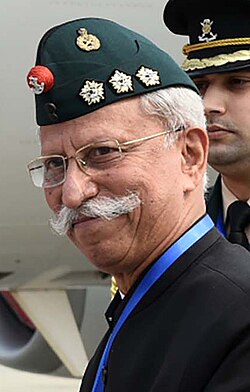
A Philosophy Forged in Service
Lieutenant General K. T. Parnaik's leadership philosophy did not emerge from academic abstraction or theoretical frameworks alone — it was forged in the unforgiving crucible of operational military command, refined across nearly four decades of service in some of India's most challenging and volatile security environments. His approach to leadership is rooted in the fundamental belief that true authority derives not from rank or position, but from the earned trust of those one leads and the unwavering commitment to the mission at hand.
At the heart of his philosophy lies the principle of disciplined decision-making — the ability to process complex, often contradictory intelligence streams and arrive at decisions that balance immediate tactical requirements with long-term strategic objectives. This capacity was honed through years of command at progressively higher levels of responsibility, from leading soldiers in direct combat operations to overseeing the strategic posture of India's most operationally active military command — the Northern Command, which encompasses the volatile theatres of Jammu & Kashmir and Ladakh.
His tenure as General Officer Commanding-in-Chief of the Northern Command demanded a leadership approach that went beyond conventional military doctrine. Managing a theatre where conventional military threats from across the Line of Control coexisted with sub-conventional insurgency, where the world's highest battlefield at the Siachen Glacier demanded extraordinary logistical and human resource management, and where every tactical decision carried strategic and diplomatic implications — this experience crystallised a leadership philosophy that prizes strategic foresight, ground-level understanding, and institutional integrity in equal measure.
These principles now animate his role as Governor of Arunachal Pradesh, where the challenges are different in form but similar in their demand for strategic vision, balanced decision-making, and a deep understanding of ground realities. The transition from military command to constitutional governance has not required a reinvention of his leadership approach — rather, it has demonstrated the universality of principled leadership across domains of national service.
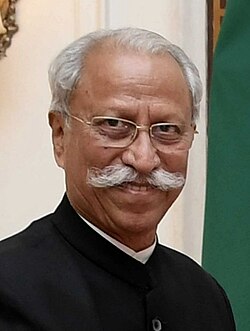
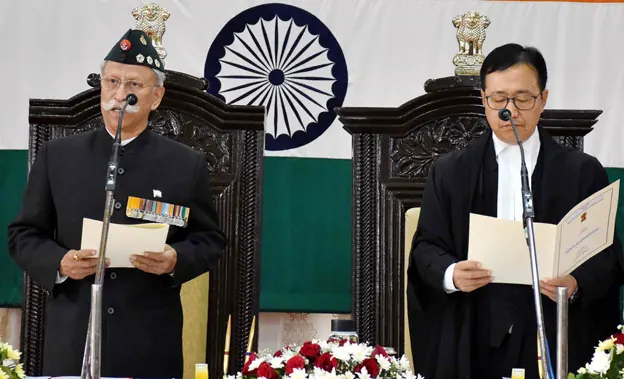
The Seamless Continuum: From Command to Constitution
The transition from military command to constitutional governance represents one of the most significant and rare career trajectories in Indian public life. While the Indian democratic tradition has always maintained a clear separation between military and civilian spheres — a healthy convention that strengthens democratic governance — the appointment of distinguished military leaders to gubernatorial positions represents a thoughtful recognition that certain states, particularly those on India's sensitive borders, benefit from the strategic perspective and administrative discipline that seasoned military commanders bring to governance.
Lt. Gen. Parnaik's appointment as the 20th Governor of Arunachal Pradesh in 2023 exemplifies this principle. As a former commander of the Northern Command — an appointment that required managing the complex security dynamics of Jammu & Kashmir and Ladakh — he brings to the Raj Bhavan in Itanagar an intuitive understanding of the challenges that border states face: the tension between development and security, the need for robust infrastructure in strategically sensitive areas, and the imperative of ensuring that frontier populations feel integrated into the national mainstream.
The Governor's role under the Indian Constitution is multifaceted — serving as the constitutional head of the state, the representative of the President, the link between the state and the central government, and in certain circumstances, the guarantor of constitutional order. For a border state like Arunachal Pradesh, which shares international boundaries with China, Myanmar, and Bhutan, the Governor's role acquires additional dimensions of strategic significance. Lt. Gen. Parnaik's deep understanding of India's northern and eastern security architecture makes his stewardship of Arunachal Pradesh particularly meaningful.
His approach to this transition has been characterised by a respect for democratic institutions and constitutional processes, combined with the decisiveness and clarity of purpose that his military career instilled. He has demonstrated that the qualities that make an exceptional military commander — strategic vision, disciplined execution, concern for welfare, institutional loyalty — are precisely the qualities that strengthen constitutional governance.
The Constitutional Guardian
As the 20th Governor of Arunachal Pradesh, Lt. Gen. K. T. Parnaik upholds the constitutional framework that binds India's diverse federal structure into a unified democratic republic.
Head of State
As the constitutional head of Arunachal Pradesh, the Governor exercises executive authority on behalf of the President of India, overseeing the administration of a state that spans over 83,000 square kilometres of strategically significant territory at India's northeastern frontier.
Guardian of the Constitution
The Governor serves as the custodian of constitutional provisions within the state, ensuring that the legislative and executive actions of the state government conform to the letter and spirit of India's Constitution, with particular attention to provisions protecting tribal rights and identities.
Bridge Between Centre & State
Serving as the vital link between the Union government and the state of Arunachal Pradesh, the Governor facilitates federal coordination on matters of national security, development policy, and constitutional governance — a role of particular significance for a sensitive border state.
A Journey of Distinction
Born in Maharashtra
Born on 28 June 1953 in Maharashtra, Lt. Gen. Parnaik's early years were shaped by the values of discipline, service, and the martial traditions of the region that produced the Maratha military heritage.
Commissioned into the Indian Army
Commissioned as a young officer in the Indian Army, beginning a military career that would span nearly four decades and take him to the highest echelons of military command.
Formative Military Years
Served in various command and staff assignments across India's diverse operational theatres, building the foundational experience in tactics, leadership, and operational planning that would define his career.
Senior Command Roles
Assumed increasingly senior command positions during one of the most challenging periods in India's internal security history, contributing to counter-insurgency operations and formation-level command in complex environments.
Brigade & Division Command
Led brigade and division-level formations, demonstrating the operational acumen and strategic vision that would mark his ascent to the highest levels of military leadership in the Indian Army.
GOC-in-C, Northern Command
Appointed General Officer Commanding-in-Chief of the Northern Command — the Indian Army's most prestigious and operationally active command — overseeing security operations across Jammu & Kashmir and Ladakh. The first individual from Maharashtra to hold this appointment.
Retirement from Active Service
Retired from active military service after a distinguished career spanning nearly four decades, having earned the nation's highest recognition for military service through the PVSM, UYSM, and YSM decorations.
20th Governor of Arunachal Pradesh
Appointed as the 20th Governor of Arunachal Pradesh, bringing his extensive military and strategic experience to the governance of India's strategically vital northeastern frontier state.
The Numbers Behind the Legacy
Explore the Legacy
Discover the full story of a leader who has served India across the spectrum of national duty — from commanding its most critical military theatre to governing one of its most strategic states.