Governance & Constitutional Authority
Serving as the 20th Governor of Arunachal Pradesh — Upholding the Constitution with Military Precision
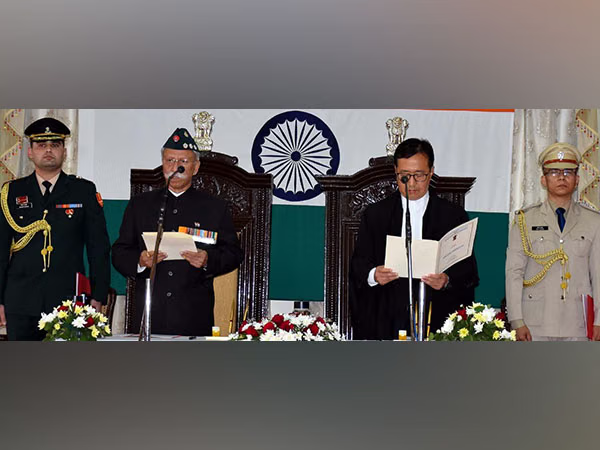
The Constitutional Guardian of Arunachal Pradesh
In February 2023, Lieutenant General Kaiwalya Trivikram Parnaik (Retd.), PVSM, UYSM, YSM, assumed office as the 20th Governor of Arunachal Pradesh at Raj Bhavan, Itanagar. His appointment placed at the constitutional helm of this strategically vital northeastern frontier state a leader with nearly four decades of military service safeguarding the very borders Arunachal Pradesh shares with three nations.
The Governor's role, defined by Articles 153 through 167 of the Constitution of India, is far from ceremonial. As the constitutional head of Arunachal Pradesh and direct representative of the President, Lt. Gen. Parnaik exercises substantive executive, legislative, and discretionary powers.
Under Article 154, executive power is vested in the Governor, exercised through the Chief Minister and Council of Ministers. In his legislative capacity, the Governor summons and prorogues the state legislature, gives assent to bills, and may promulgate ordinances when the assembly is not in session — functions requiring careful balance between state autonomy and Union oversight in a sensitive border state.
Arunachal Pradesh shares approximately 1,129 km of border with China, 440 km with Myanmar, and 160 km with Bhutan. For a former GOC-in-C of the Northern Command — responsible for India's most contested frontiers in Jammu & Kashmir and Ladakh — the security dimensions of governing this state are lived operational realities, not abstract policy considerations.
The Governor also oversees the Inner Line Permit system under the Bengal Eastern Frontier Regulation, 1873, which restricts entry of Indian citizens from other states into Arunachal Pradesh. This mechanism requires balancing the protection of indigenous tribal populations and their land rights with the state's developmental integration into the national mainstream.
In his interactions with the state legislature and central government — from reports to the President to coordination with the Union Home Ministry on security matters — Lt. Gen. Parnaik has prioritised institutional integrity, constitutional propriety, and the welfare of the people of Arunachal Pradesh.
True governance is not about the exercise of power but about the stewardship of trust — the trust that the people place in their institutions, and the trust that the Constitution places in those who serve it.
A Governance Philosophy Rooted in Service
Lt. Gen. Parnaik's governance philosophy centres on disciplined decision-making, transparency, and strict adherence to institutional processes. Decades of military command, where decisions carried life-and-death consequences, shaped an approach that prioritises thorough analysis, clear communication, and decisive action.
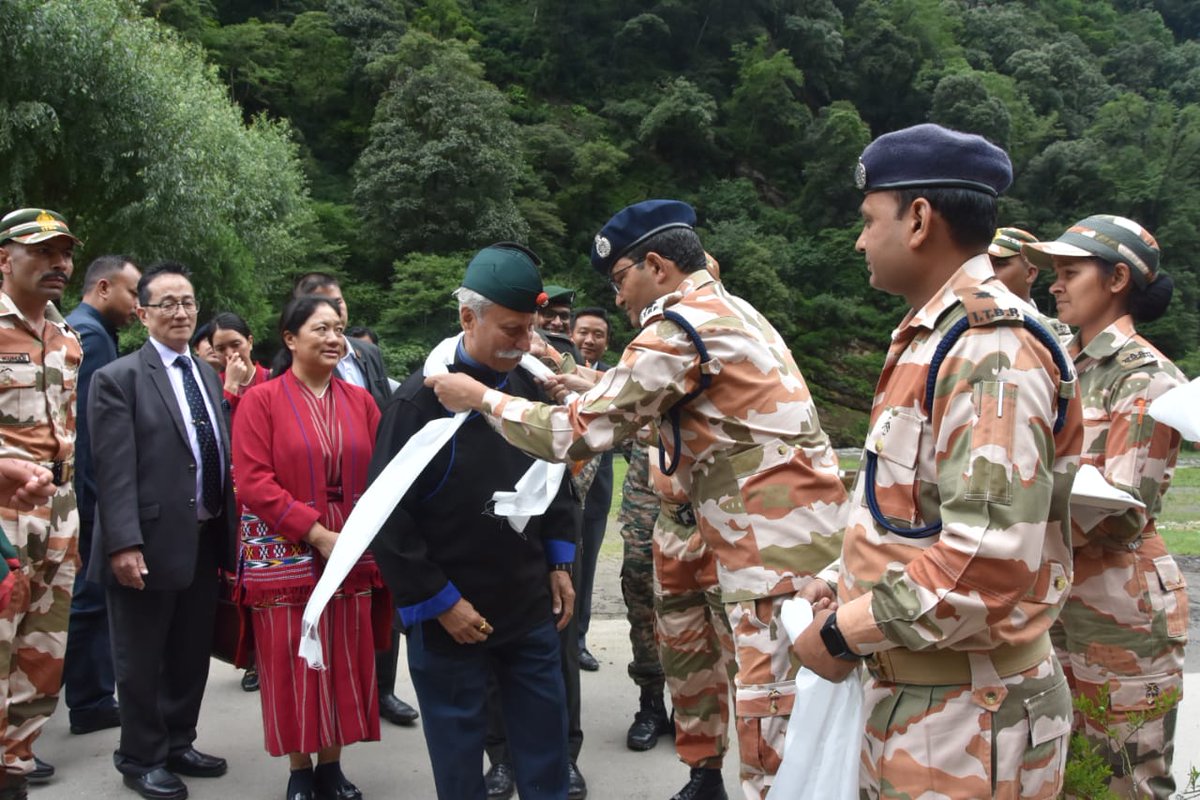
Accessibility has defined his tenure. Through visits to remote districts, interactions with village councils and traditional institutions, and direct engagement with citizens, Lt. Gen. Parnaik has earned a reputation as a Governor who listens — a quality especially valued by Arunachal Pradesh's diverse tribal communities.
His engagement with the twenty-six major tribal communities and over one hundred sub-tribes reflects deep respect for the state's cultural diversity. From the Monpa and Sherdukpen of Tawang to the Adi and Galo of the central districts, the Nyishi of Subansiri, and the Mishmi of the eastern frontier, the Governor has sought to honour each community's distinct traditions, customary laws, and governance structures.
Military command principles translate naturally into his governance approach. The concept of "mission command" — giving subordinates clear objectives and autonomy — finds expression in empowering district officials while maintaining strategic oversight. The military emphasis on logistics and forward planning drives his prioritisation of infrastructure development and long-term strategic planning.
Most significantly, the military principle of placing institutional welfare above personal interest animates his constitutional role. The Governor's office, in his conception, exists to safeguard the constitutional framework that protects the rights, identities, and aspirations of every citizen of Arunachal Pradesh.

Bridging Two Worlds: Command and Constitution
The transition from military command to constitutional governance is among the most demanding shifts in public leadership. The military operates through hierarchical authority and immediate resource direction, while constitutional governance functions through consensus, deliberation, and the accommodation of diverse political interests. Lt. Gen. Parnaik has navigated this transition effectively, demonstrating the adaptability of his leadership.
His crisis management experience from decades in conflict zones has proven invaluable in governing a state facing natural disasters in mountainous terrain and complex frontier development challenges. The ability to assess rapidly evolving situations, allocate resources efficiently, and coordinate multiple agencies translates directly from military operations to state governance.
As GOC-in-C Northern Command, Lt. Gen. Parnaik simultaneously oversaw conventional defence, counter-insurgency operations, disaster relief, and diplomatic sensitivities. This multi-domain strategic thinking now informs his governance of Arunachal Pradesh, where development, security, environmental conservation, tribal welfare, and federal relations must be woven into a coherent strategy.
The joint operations paradigm — where Army, Navy, Air Force, and paramilitary forces coordinate across domains — parallels state governance, where multiple departments and levels of government must work in concert. His experience orchestrating joint operations across the Northern Command equips him for the inter-departmental and centre-state coordination that governance demands.
The transition carries philosophical challenges: the military's decisive action must be tempered by democratic deliberation, and a commander's authority must yield to a constitutional head's obligation to advise within established norms. Lt. Gen. Parnaik has embraced these distinctions as the defining virtues of India's democratic system — one that, as he has observed, the military itself exists to protect.
Pillars of Governance
Constitutional Fidelity
Every action of the Governor's office is guided by an unwavering commitment to the letter and spirit of the Indian Constitution. Lt. Gen. Parnaik views constitutional fidelity not as a bureaucratic obligation but as a sacred trust — the foundation upon which the rights and liberties of every citizen of Arunachal Pradesh ultimately rest. His military oath to defend the Constitution now finds expression in his gubernatorial oath to uphold it.
Development Focus
Arunachal Pradesh's development imperatives — from road and rail connectivity to digital infrastructure, from educational institutions to healthcare facilities — require sustained attention and strategic prioritisation. The Governor has championed infrastructure projects that connect remote communities while ensuring that development respects the ecological sensitivity and cultural heritage of the state's pristine landscapes and diverse tribal traditions.
Security Consciousness
As the constitutional head of a state that shares international borders with three nations, the Governor maintains an acute awareness of security dynamics. Lt. Gen. Parnaik's unparalleled understanding of India's northern and eastern security architecture ensures that governance decisions are informed by strategic considerations, and that the state's security infrastructure receives the attention and resources it requires to safeguard national sovereignty.
Tribal Welfare
The welfare and empowerment of Arunachal Pradesh's indigenous tribal communities stand at the centre of the Governor's governance priorities. From protecting customary land rights and traditional governance structures to expanding educational and economic opportunities, Lt. Gen. Parnaik has consistently advocated for policies that honour tribal identity while creating pathways for inclusive development and modern opportunity.
Federal Coordination
The Governor serves as the critical bridge between the state of Arunachal Pradesh and the Union government in New Delhi. Lt. Gen. Parnaik has leveraged his extensive national-level relationships — built across decades of service at the highest echelons of military command — to ensure that Arunachal Pradesh's development needs, security concerns, and strategic significance receive appropriate attention in the corridors of central policy-making.
Institutional Strengthening
Strong institutions are the bedrock of effective governance. The Governor has prioritised the strengthening of Arunachal Pradesh's administrative, judicial, and educational institutions — from ensuring the proper functioning of Panchayati Raj institutions at the grassroots level to supporting the growth of the state's universities and research bodies, recognising that institutional capacity determines the quality and sustainability of governance outcomes.
Governor's Engagements
Since assuming office, Lt. Gen. Parnaik has undertaken extensive state visits to remote districts, border areas, and tribal heartlands rarely reached by his predecessors. These visits span from the monastery town of Tawang in the west to the Lohit Valley in the east, from the Siang basin's river communities to the highland settlements along the McMahon Line.
His interactions with armed forces stationed in Arunachal Pradesh carry unique weight given his background as a former Army commander. Visits to forward military posts, attendance at military ceremonies, and engagement with defence establishments boost troop morale while keeping the Governor's office attuned to the security dynamics along the state's international borders.
Development programmes occupy a central place in the Governor's calendar — inaugurating roads, bridges, power installations, and communication towers while reviewing centrally sponsored schemes and state initiatives. His particular attention to education, through school and college visits across the state, reflects his belief that human capital development is the most important determinant of Arunachal Pradesh's long-term trajectory.
Cultural preservation is another key dimension of his engagements. The Governor has actively participated in tribal festivals, supported initiatives to document endangered languages and traditions, and advocated for integrating indigenous knowledge systems into the state's educational curriculum — recognising cultural vitality and developmental progress as complementary imperatives.
Border area visits are perhaps the most distinctive element of his gubernatorial programme. His journeys to settlements and military outposts along the international frontiers reassure border communities, assess infrastructure development in frontier areas, and reinforce that Arunachal Pradesh's borders are not the periphery of India's concerns but the frontier of its sovereign commitment.
Understanding the Governor's Constitutional Mandate
Under the Indian Constitution, the Governor is not merely a titular head but a constitutional authority with substantive powers essential to democratic governance at the state level. For Arunachal Pradesh, these responsibilities acquire additional complexity owing to the state's unique geographic, demographic, and strategic characteristics.
All bills require the Governor's assent, demanding scrutiny for constitutional validity and consistency with fundamental rights. The Governor also summons and prorogues the legislature, addresses the assembly at each session's commencement, and may promulgate ordinances. In Arunachal Pradesh, where legislation often intersects with tribal rights, land ownership, and cultural preservation, this legislative role carries particular weight.
Appointing the Chief Minister is among the Governor's most significant functions. While ordinarily straightforward, in situations of hung assemblies, coalition realignments, or constitutional crises, the Governor's judgement becomes decisive in ensuring stable democratic governance. Lt. Gen. Parnaik's reputation for impartiality serves as a guarantee of constitutional order in such eventualities.
As Chancellor of state universities, including Rajiv Gandhi University, the Governor influences Arunachal Pradesh's educational landscape through Vice-Chancellor appointments, academic oversight, and institutional strategic direction. Lt. Gen. Parnaik brings a deep conviction that educational excellence is the foundation of the state's future prosperity and security.
The Governor's discretionary powers are especially significant in Arunachal Pradesh, governed in part by Sixth Schedule provisions relating to tribal area administration. The State of Arunachal Pradesh Act and related constitutional instruments vest in the Governor discretionary responsibilities for protecting tribal rights, customary laws, and traditional governance structures. Lt. Gen. Parnaik's approach has been characterised by thorough consultation, respect for tribal traditions, and commitment to protecting indigenous communities while integrating the state into India's national development trajectory.